
Tourist Third Cabin by White Star LineR.M.S. Celtic - R.M.S. CedricWith every essential to comfort provided on shipboard, this new form of ocean travel has proved tempting to thousands, resulting in an immense, popular vacation to Europe by Americans who formerly remained at home. Tourist Third Cabin was inaugurated by the International Mercantile Marine in 1924. By 1926, the former Second Class accommodation on Celtic and Cedric had become Tourist-Third on the Liverpool-New York route. Having only recently refurbished their Second Class, White Star now offered a refreshed standard of comfort for the new Tourist traveler. Third Class passengers also witnessed significant improvements in their accommodations.
|
Tourist-Third Public Rooms
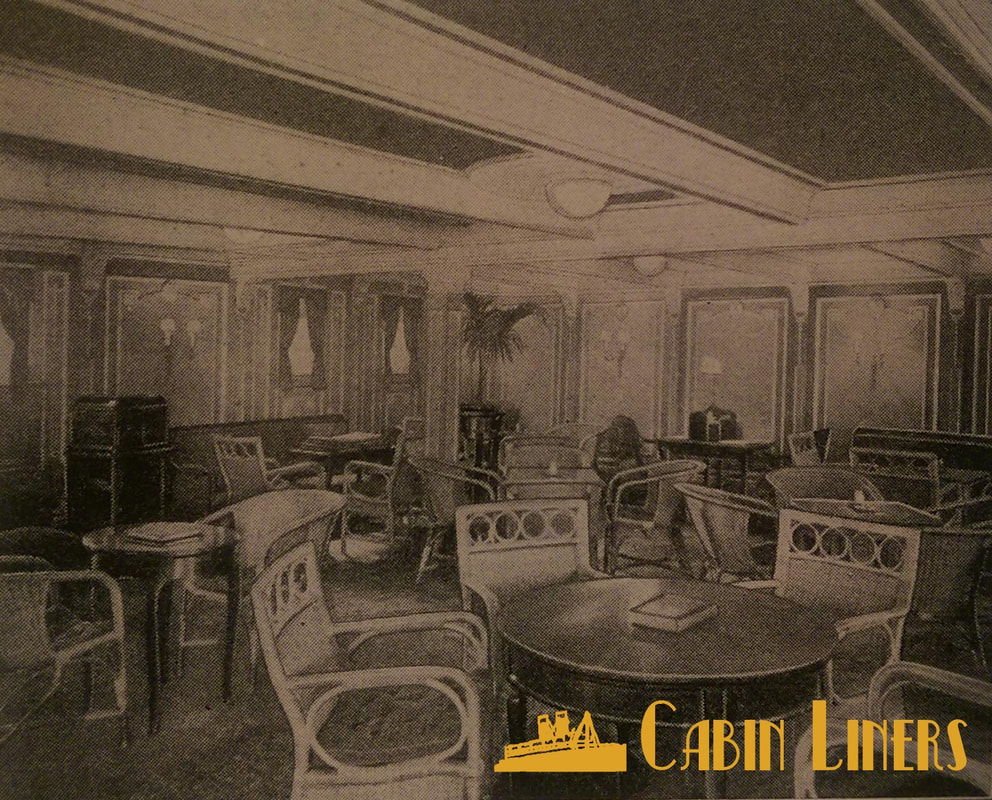
Tourist-Third (formerly Second Class) Aft Lounge, added in 1925. "Europe for All! Vacation Voyages at Moderate Cost" Brochure; c.1926.
|
Located in an additional separate deck-house aft of the Cabin Class accommodation were the Library and Smoking Room for Tourist-Third (formerly Second Class) passengers. These two apartments each occupied one half of the deck-house, the Library on the port-side and the Smoking Room located starboard. Decorated in elegant oak and walnut paneling, both rooms were generously sized and furnished with large fitted settees and swivel chairs fixed to the floor in case of rough seas. The Smoking Room was fitted with red-brown leather seating whilst the Library furniture was upholstered in colourful floral-patterned fabric. The Library held a large supply of books available to passengers which were kept in a handsome walnut bookcase.
|
In addition to the Library and Smoking Room, Tourist-Third Cabin benefited from a new Lounge located aft of these apartments. Added in 1925 to improve Second Class, this room was fitted by enclosing the covered portion of the former Third Class boat deck to create an additional deck-house. White Star Line made efforts to create a modern atmosphere in this room. The Lounge was decorated in light wood paneling painted in soft tones. The furnishings consisted of white wicker armchairs, freestanding fabric sofas, and large patterned rugs. Potted plants were placed throughout the room and a piano and gramophone were also installed.
Third Class Public Rooms
|
Passengers traveling in Third Class enjoyed use of a spacious set of public rooms at the stern of the liner. When Celtic and Cedric first entered service, these consisted of a nearly identical general room and smoke room, fitted with long galley tables and fixed wooden chairs corresponding in design with the dining saloon directly below. This allowed these rooms to be used as additional dining space should this be required. White Star Line extensively refurbished this section in 1921 to meet the needs of the modern Third Class traveler. The original arrangement was replaced with a new Smoking Room, Lounge, Barber's Shop, and Children's Playroom. The decoration of these rooms was significantly improved with bright white walls, panelled half-height in teak and hung with pictures. New cane seating was arranged around smaller tables. Passengers were able to make use of a piano and gramophone and purchase chocolates and souvenirs from the newly enlarged Barber's Shop.
|
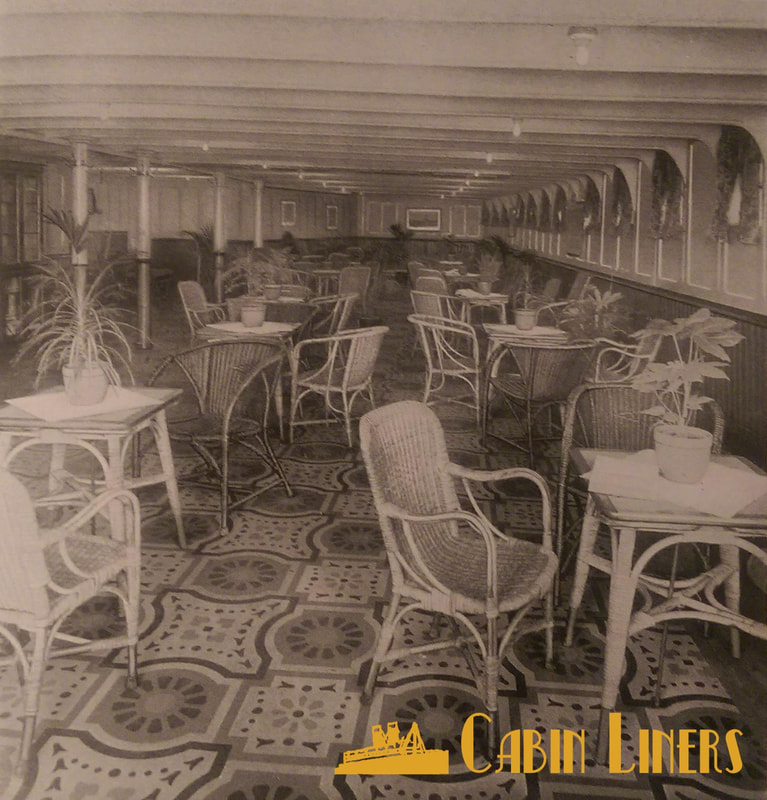
Third Class Lounge on Cedric. "Boston & New York: Third Class" Brochure; c.1930.
|
Tourist Third Dining Saloon

Tourist-Third (formerly Second Class) Dining Saloon. "Europe for All! Vacation Voyages at Moderate Cost" Brochure; c.1926.
|
Tourist-Third passengers took their meals in the former Second Class Dining Saloon located aft on Deck 'D' behind a large portion of the Tourist Third Cabin Staterooms. Similar in decoration to the much larger Cabin Class dining saloon, this apartment was fitted with long galley tables accompanied by comfortable fabric covered swivel seats which were permanently fixed to the deck. The wall paneling was simple yet tastefully carved and decorated in white and gold. A piano was installed in this room for the purpose of Sunday divine service and later also for entertainment
|
Third Class Dining SaloonDirectly aft of the main section of Tourist-Third accommodation was the Third Class dining saloon. Divided equally into port and starboard compartments, this room was plain in design yet airy, bright, and spacious. It was fitted in the customary arrangement of long, wooden tables accompanied by plain wooden dining chairs fixed to the deck. These tables were originally long, filling the length of the space. At the peak of immigrant travel, this vast space was insufficient to seat all diners and the General Room on deck above could be used as over-spill seating. Following a major post-war refurbishment in 1921, the comfort and cosmetic appearance of this room was improved by smaller tables, new flooring, fresh table linen, and additional paintings and curtains to brighten its plain walls.
|
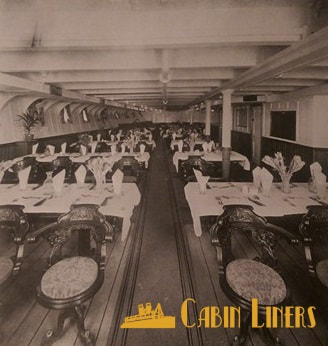
Third Class Dining Saloon on Cedric. "Boston & New York: Third Class" Brochure; c.1930.
|
Tourist-Third Staterooms
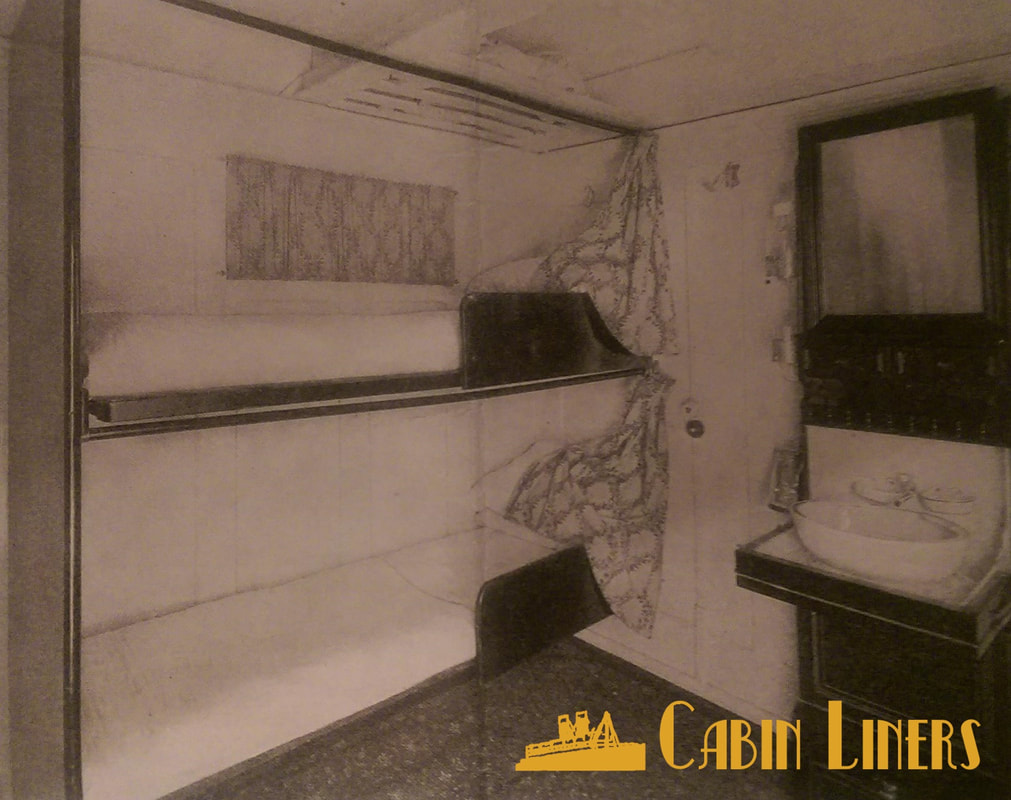
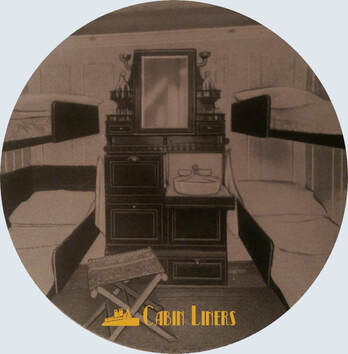
A typical two berth Tourist-Third (formerly Second Class) Stateroom aboard Cedric. "Europe for All! Vacation Voyages at Moderate Cost" Brochure; c.1926.
|
Staterooms for Tourist-Third Cabin passengers were located across Decks 'D', 'E', and 'F', arranged in configurations of two, three, or four berths. These staterooms was painted in white enamel. Each stateroom was fitted with wooden bunk berths, upholstered seating berths, large wooden washstands, electric lighting, and ample storage space. Originally Second Class accommodation, the White Star Line saw the need to introduce further improvements when these rooms were reclassified as Tourist-Third in 1926. The installation of running water and the replacement of the old berths with modern beds significantly improved the comfort of the passengers in this new class of travel. The company also introduced a number of single-berth staterooms, mostly located at the fore of Deck 'D'.
|
Third Class Cabins
|
Passengers travelling in Third Class aboard White Star Line from 1901 enjoyed more comfortable accommodation than her most of her competitors. The vast majority of Third Class passengers were accommodated in cabins sleeping between two and ten passengers. Each cabin was bright painted and provided with comfortable berths, fresh linen, electric lighting, space for storing luggage, and electric buzzers for calling a steward directly when required. With the decline of immigrant traffic from 1919 onward, the company further improved these cabins by modernizing their appearance. A number of passengers had previously been accommodated in large open dormitories which were removed in favour of smaller, comfortable cabins.
|
|