R.M.S. Mauretania
|
|
|
In June 1903, the British Government signed an agreement with the Cunard Line to loan the company £2.6 million for the construction of two new transatlantic giants with a service speed of at least 24 knots. The construction of R.M.S. Lusitania and R.M.S. Mauretania aimed to protect the company and the British merchant fleet from the perceived threats of German competition and American commercial consolidation. R.M.S. Lusitania entered commercial service in September 1907. She was joined by her younger sister R.M.S. Mauretania just two months later. The two vessels were propelled by four Parsons steam turbine engines which made them more than capable of capturing the 'Blue Riband' for the fastest eastbound and westbound transatlantic crossings. R.M.S. Mauretania finally took the title for both crossings from her elder sister in 1909. She would hold the title for a remarkable twenty years, finally passing on the title to Norddeutscher Lloyd's S.S. Bremen in 1929.
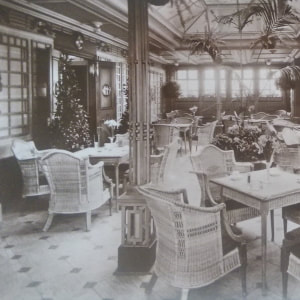
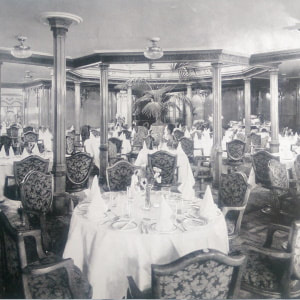
By the late 1920s, Mauretania's yacht-like appearance and elegant Edwardian interiors continued to provide her passengers with a sense of stability, comfort, and sound engineering. Her beautiful interiors were designed by English architect Harold Peto who employed twenty-eight different woods within an extensive variety of period revival styles. The company also improved her accommodations to keep up with modern expectations, with significant renovations carried out during the winter of 1926-27. By 1931, her quality Second Class accommodations were also reclassified to the newly introduced Tourist Class. Cunard's transatlantic greyhound was transferred to cruising duties in June 1933 with her elegant black hull repainted in clean white. With the merger of Cunard-White Star in 1934, Mauretania was deemed surplus to requirements as the new company concentrated their resources into the construction of the future R.M.S. Queen Mary. She departed Southampton for the ship-breakers on 1st July 1935. After a brief ceremonial stop at her birthplace in Wallsend, she finally arrived at Rosyth on 4th July to the funeral lament of a lone piper. The last of her great hull had disappeared by 1937. |
|
|