Cabin Liners
  • Home
  • Step Aboard
  • Blog
  • Resources
    • Bibliography
    • External Links
  • About
  • Contact

Our Story

12/3/2019

 
The 1920s and 1930s were a new age in ocean travel. Leading up to the First World War, La Belle Époque had been a combined age of increasingly comfortable ocean travel and mass migration. Fueled by fierce economic competition, rapid technological development, and concern for national status, shipping companies and national governments were engaged in a constant battle of one-upmanship for the fastest, smoothest, and best equipped transatlantic liners. All passengers enjoyed increasing comfort - from the vastly improved welfare and facilities for third class immigrants, to the opulent design and innovative facilities in first class accommodation.
Picture
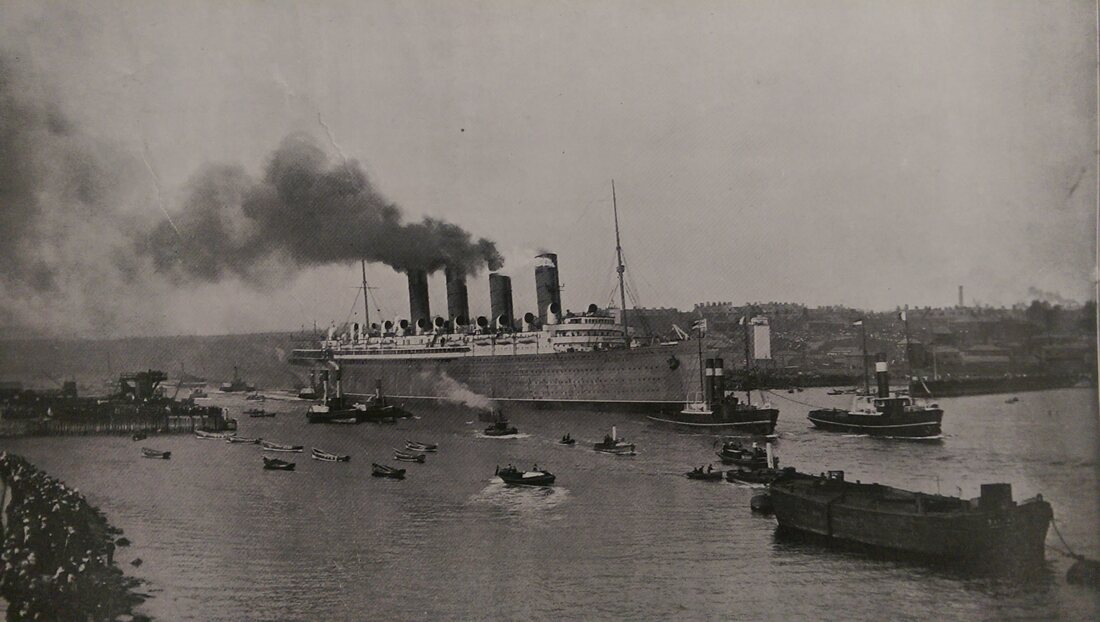
R.M.S. Mauretania after fitting-out.
The war brought about a changed world. Shipping companies were gradually forced to adapt but their evolution ushered in a second golden age of the ocean liner. Increased prosperity opened up travel to many and newly restrictive U.S. immigration law shifted focus away from migrants to a new class of traveller. This was the birth of the ‘Cabin Liner’ era. Whilst First Class remained on the great express liners, passengers on smaller vessels could take advantage of the new Cabin Class, providing the comfort and service of first class at almost second class rates. Meanwhile, much of the once vast Third Class gradually gave way to the new Tourist-Third Cabin. Open spaces once filled by immigrants searching for a better life were replaced by neat, modern cabins for students, backpackers, and a new class of holiday makers. A new world brought about a new understanding of ocean travel.
Cabin Ships are the result of public demand for luxury in transatlantic travel at moderate rates. The Cabin Traveler enjoys every comfort and many of the luxuries of the great express liners - and yet for a pleasingly smaller fare.
Picture
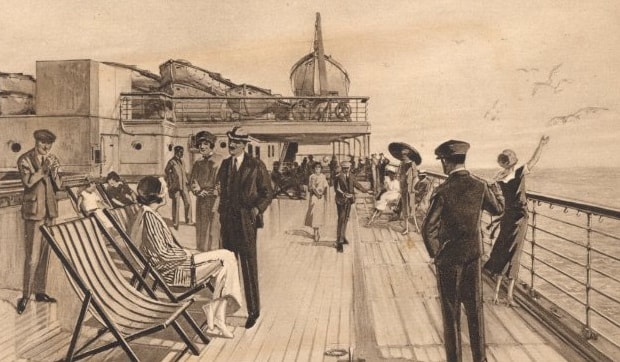
Tourist-Third Cabin deck aboard R.M.S. Majestic
Although these ‘Cabin Liners’ offered a new mode of travel for many routes, they did not prevent shipping lines from maintaining the luxury express service on the North Atlantic. Throughout the late 1920s, the famous Southampton-New York run was serviced by two great trios of Liners; Cunard Line’s ‘The Big Three’, Aquitania, Berengaria, and Mauretania; and White Star Line’s ‘The Magnificient Trio’, Majestic, Olympic, and Homeric. These great ladies maintained the elegance and luxury associated with transatlantic travel, their pre-war styles and sweeping lines appearing striking against the more modest forms of the ‘Cabin Class’ era. To many, it appeared like a new glamorous age for the Ocean Liner
Picture
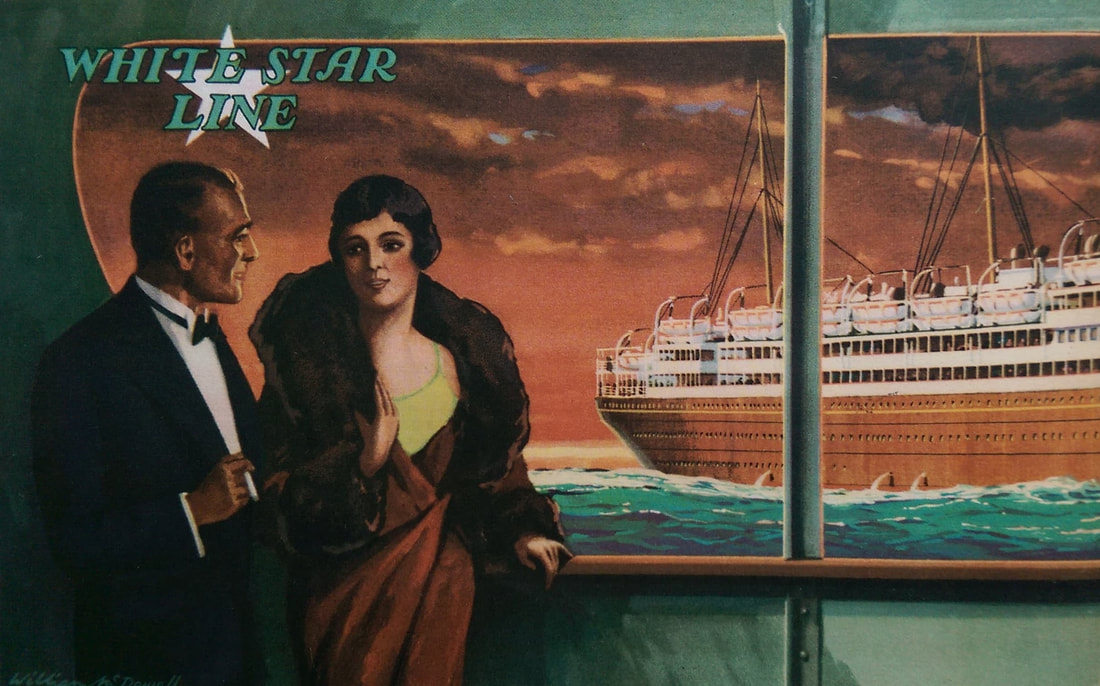
Brochure cover for the Cabin Class service aboard R.M.S. Adriatic.
The shipping industry then entered the difficult years of the early 1930s, with the economic hit of the depression mounting and passenger numbers falling. Gradually, travel evolved into a new phase. Tourist-Third Cabin was merged with Second Class, creating the new concept of Tourist Class, offering extensive accommodations suitable for the large middle market. In this new ‘Tourist Age’, the Cabin Liner ceased to be a adjustment to the post-war fleet. Shipping lines built modern, economical, modestly sized liners dedicated to the new Cabin-Tourist-Third configuration, such as the M.V. Britannic and M.V. Georgic of the White Star Line. Gradually, the great Edwardian liners which had made their mark on the 1920s would become a thing of the past. In Britain, the merger of Cunard-White Star Limited in 1934 sealed the fate of such well-loved vessels as Olympic and Mauretania. As the depression eased, the company would introduced super-liners for a new age; R.M.S. Queen Mary and R.M.S. Queen Elizabeth, taking forward the advancements of the ‘Cabin Era’ on a new scale.

The Late 1920s and early 1930s therefore witnessed a gradual yet dramatic change in how the public enjoyed ocean travel. Once mostly reserved for the millionaire classes and the hopefuls of mass migration, ocean travel was now altogether more ‘popular’. The ‘Cabin Liners’ and their grander running mates carried everybody from the wealthy ‘bright young things’, to middle class Americans exploring the wonders of the ‘old world, to ‘cruisers’ who would once have been unable to afford foreign travel. This change reality of life on the ocean, in many ways setting the grounds for how we view ocean travel day, is what makes this period in commercial maritime history so worth exploring.

Comments are closed.

    tags

    All
    Admin And Updates
    Cunard Line
    Dining At Sea
    Entertainment
    Red Star Line
    White Star Line

    Archives

    December 2023
    December 2022
    May 2020
    March 2019

    RSS Feed

Step Aboard

Anchor Line
Cunard Line
Cunard-White Star
Canadian Pacific
Red Star Line
White Star Line

DISCOVER

about us

Blog Articles
Bibliography
External Links
About
Contact
Updates

Privacy and Cookies
​​Terms of Use
© CABIN LINERS 2018-2025.
​ALL RIGHTS RESERVED.
  • Home
  • Step Aboard
  • Blog
  • Resources
    • Bibliography
    • External Links
  • About
  • Contact